
Fit beyond the name
Read the academic structure, support and campus setting. Ask whether the student wants the degree’s flexibility and could picture ordinary life there.
The greatest variety of campus formats in this set and the widest spread of prices and aid. A sensible search starts with academic, personal and financial fit together, then tests each college’s actual requirements.
For students coming from Spain or Italy, this guide looks at the degree itself, admissions, the economy, the full budget and daily life. Figures are illustrations, not a quote for a particular student or entry year.
Download the guide as a PDF ↓Use these as a working brief. Each answer should refer to a real programme, a particular city and the student’s own circumstances.
Read the academic structure, support and campus setting. Ask whether the student wants the degree’s flexibility and could picture ordinary life there.
Compare the full cost of attendance with the aid the student can actually apply for or has been offered. Include housing, health cover and travel.
Track essays, recommendations, records, tests if required and aid deadlines for every institution. Give the student enough time to do their own writing.
Bring what you find into a family discussion. Our tools can help organise a comparison, while universities and official services confirm their own rules.
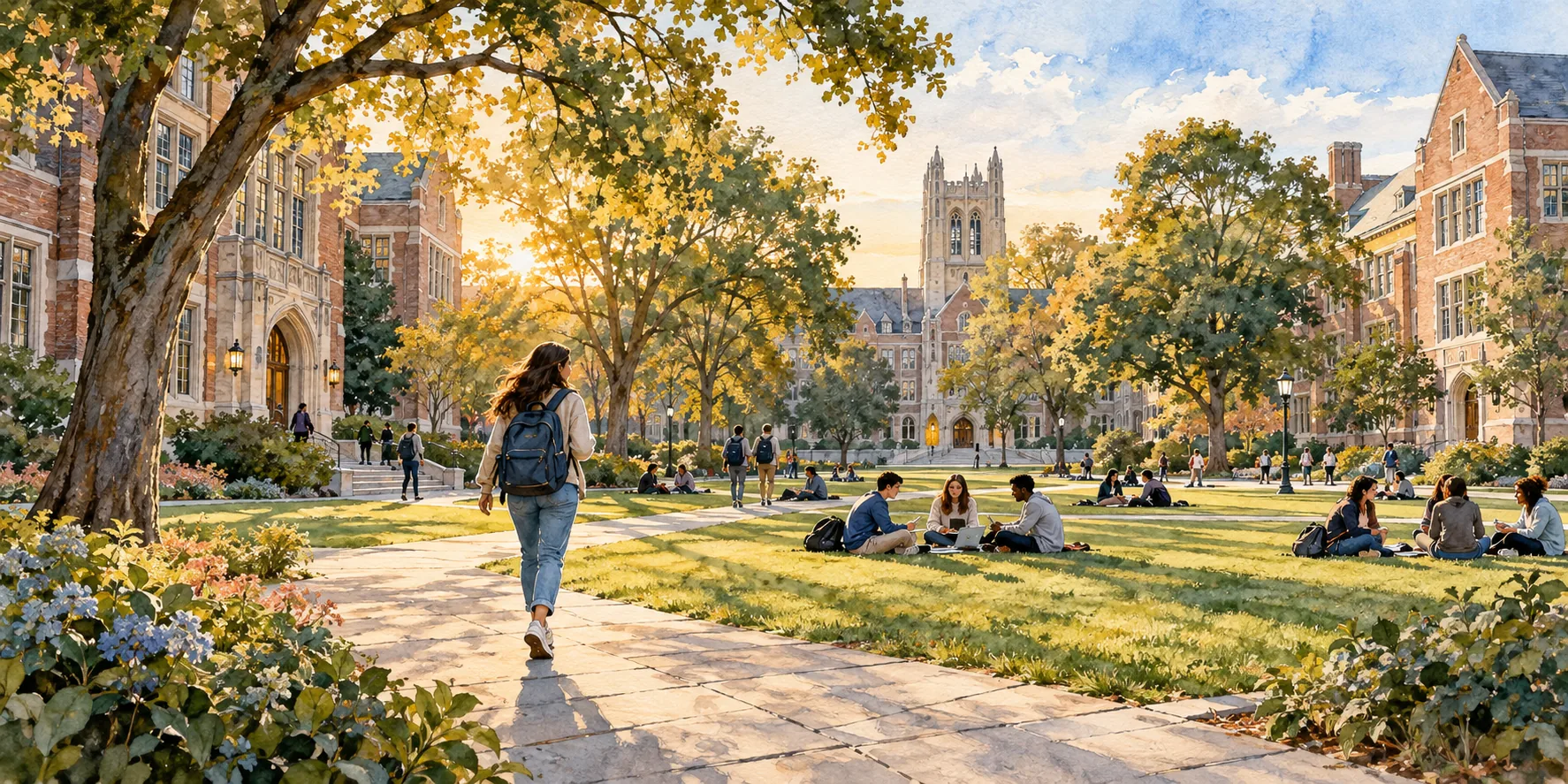
Test the net budget →Students may explore liberal-arts colleges, large research universities, specialist institutions and community-college transfer pathways. Degree structures often allow broader early study before a major, but rules differ. Compare graduation requirements, class sizes, advising, safety and support for international students.
Do not choose solely by a famous name. A balanced list includes academic reach, likely admission fit and financially workable choices. Check whether a subject is directly admitted, whether changing majors is possible, and whether a specific profession requires later postgraduate training.
EducationUSA describes an institution-specific process: school records, essays, recommendations and English evidence can all be involved. Testing rules and document evaluations differ. International applicants should check each college’s website and financial-aid application deadlines, which may differ from admissions dates.
For a Bachillerato or maturità applicant, ask how transcripts and predicted/final results are submitted and whether translations are required. Build a calendar with teachers and referees early. Some colleges use the Common Application, while others use their own process; the institution’s instructions are decisive.
Tuition and fees vary greatly across colleges. The advertised amount is only the first line: ask for the institution’s international-student cost of attendance.
Subtract confirmed grants and scholarships, then add required housing, meals, health insurance, books, visa-related charges and flights. Keep a four-year projection and check renewal conditions for aid.
Need-based aid and merit awards for international students vary by institution. Some scholarships cover only part of the expense. Never treat a possible award as money already available.
Planning method: request the exact programme fee, price a real room, add food, transport, insurance, travel home, deposits and a contingency. Recheck every figure before accepting an offer.
Many colleges offer on-campus rooms and meal plans, sometimes required in the first year. Compare cost, guarantee period, vacation closures, residence support and transport. For off-campus housing, check lease terms, deposits, utility costs and the effect of distance on safety and study. Confirm when international students can move in.
Dense academic and employer networks; potentially very high housing and travel costs.
Campus-centred social life and different daily expenses; inspect travel connections.
Often large academic offerings; international tuition and aid terms need specific checking.
The US economy and job markets vary by state and city, from technology and healthcare to finance, media, agriculture and manufacturing. Campus career support, internships and alumni networks can be valuable, but immigration and work authorisation rules constrain opportunities. Compare concrete programme outcomes and official visa guidance before making career assumptions.
Distance from Spain or Italy makes travel and support planning important. Ask about international orientation, academic advising, medical care, insurance, campus safety and support during holiday closures. A residential college experience can be rewarding, but the family should discuss independence, time zones and a realistic contact plan.
Our role: We can structure the university search and application plan with the family. We do not claim a US office or guarantee admission or funding; institutions and official authorities determine their own rules.
We can help the family compare options and organise the work, while the institution and official authorities decide admissions, fee status and any immigration requirements.
Reviewed September 2026. Cost examples are sourced and dated where available. National averages are not offers. Requirements, fees, deadlines, housing and work or visa rules can change; the university and competent authorities are the final source for the student’s circumstances.
Tell us about the student’s interests, budget and questions. We’ll identify the next useful checks.